
Key Takeaways
- 1Build secure cloud infrastructure using Amazon VPC
- 2Automate software delivery using Jenkins CI/CD and Docker
- 3Manage containers at scale using Kubernetes
Quick Takeaway:
- Build secure cloud infrastructure using Amazon VPC.
- Deploy scalable applications using EC2, Load Balancer and Auto Scaling.
- Automate software delivery using Jenkins CI/CD.
- Package applications with Docker.
- Manage containers using Kubernetes.
- Store structured and unstructured data using Amazon RDS, S3 and DynamoDB.
Introduction
Modern applications require high availability, scalability, security and rapid deployment. AWS and DevOps practices enable organizations to build resilient cloud-native platforms capable of handling increasing workloads while reducing operational complexity.
Building the Foundation with Amazon VPC
Amazon Virtual Private Cloud (VPC) provides isolated networking with public and private subnets, route tables, internet gateways and security groups to protect cloud resources.
Amazon EC2
Amazon EC2 provides flexible virtual servers for web applications, backend services and development environments with multiple operating systems and instance types.
Bastion Host
A Bastion Host offers secure SSH access into private subnets while preventing direct exposure of production servers to the internet.
Launch Templates
Launch Templates standardize EC2 provisioning by defining reusable AMIs, instance types, storage, security groups and startup scripts.
Application Load Balancer
Load Balancers distribute incoming traffic across multiple EC2 instances while continuously monitoring server health.
Auto Scaling Groups
Auto Scaling dynamically adjusts compute capacity based on demand, improving both application performance and infrastructure cost efficiency.
Storage and Databases
Amazon S3 provides highly durable object storage while Amazon RDS automates relational database administration. DynamoDB delivers fully managed NoSQL storage with millisecond latency for cloud-native applications.
CI/CD with Jenkins
Jenkins automates software build, testing and deployment pipelines, helping development teams deliver reliable releases quickly and consistently.
Containerization with Docker
Docker packages applications and dependencies into portable containers, ensuring consistent execution across development, testing and production environments.
Docker Compose
Docker Compose simplifies running multiple interconnected services such as web servers, databases and cache servers using a single YAML configuration.
Multi-Stage Docker Builds
Multi-stage builds create optimized container images by separating build dependencies from runtime components, resulting in smaller, faster and more secure images.
Kubernetes
Kubernetes automates deployment, scaling, service discovery, rolling updates and self-healing for containerized workloads, making it the preferred orchestration platform for enterprise cloud applications.
Putting Everything Together
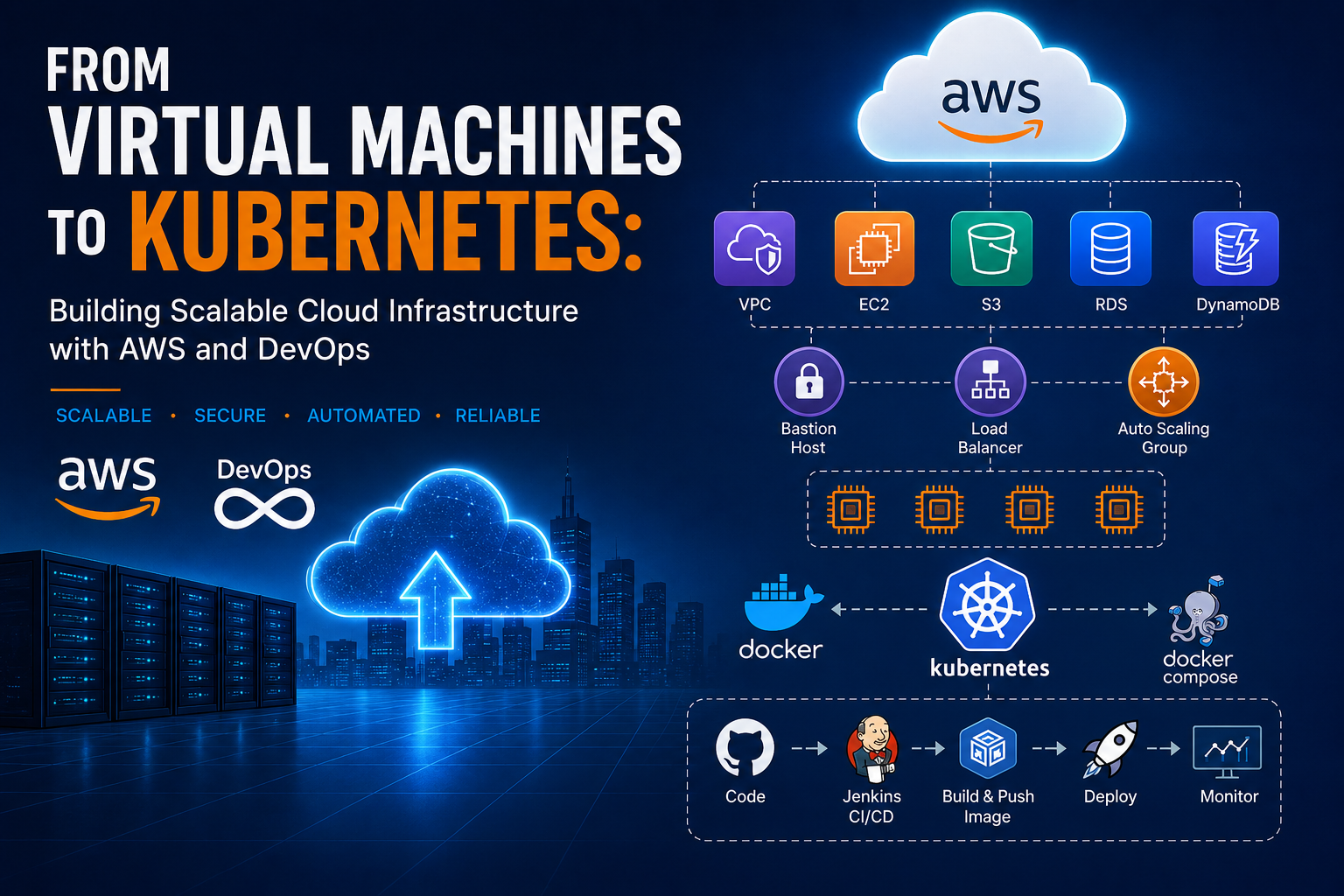
A modern cloud platform combines Amazon VPC, EC2, Bastion Hosts, Launch Templates, Load Balancers, Auto Scaling Groups, Amazon S3, Amazon RDS, DynamoDB, Jenkins, Docker and Kubernetes into a unified architecture capable of delivering scalable, secure and highly available applications.
Frequently Asked Questions
Why is Kubernetes used? Kubernetes automates deployment, scaling and management of containerized applications.
Why is Docker important? Docker ensures applications run consistently across different environments.
What is Amazon VPC? Amazon VPC creates a secure and isolated virtual network inside AWS.
Is Jenkins a DevOps tool? Yes. Jenkins is one of the most widely used CI/CD automation platforms.